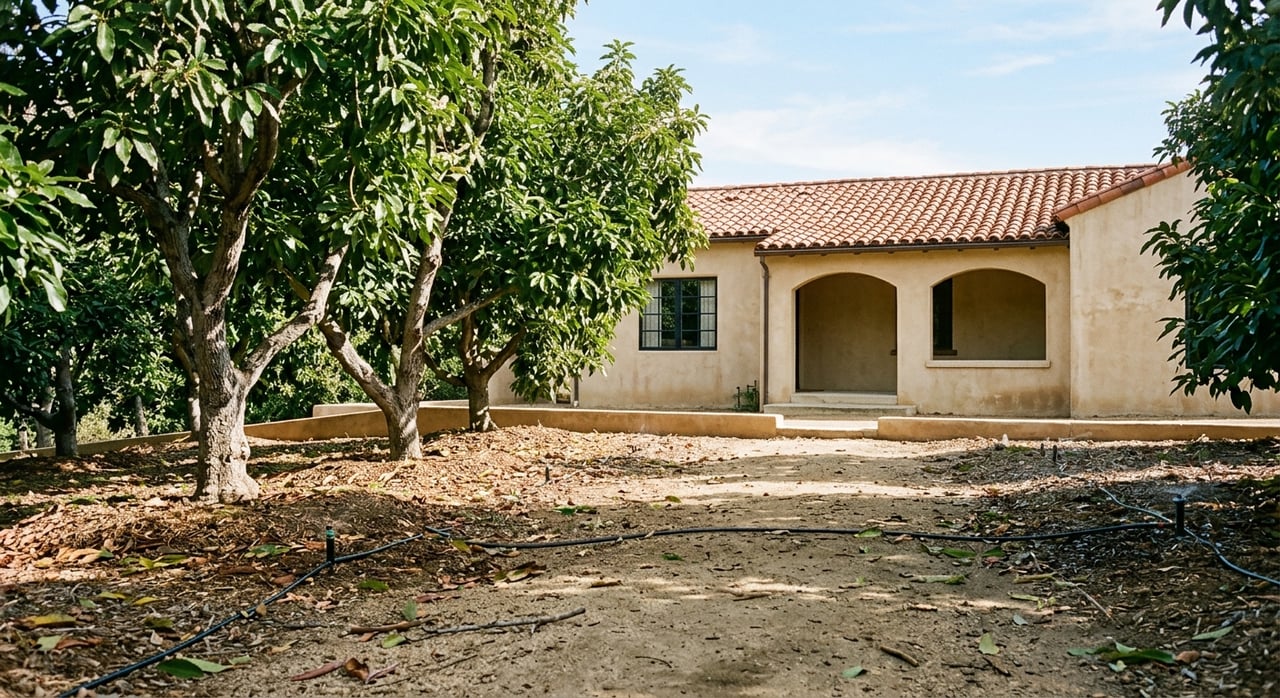
Owning Acreage And Avocado Groves In Fallbrook
May 7, 2026
May 7, 2026
Dreaming about space, privacy, and rows of avocado trees under the Fallbrook sun? You are not alone. For many buyers, owning acreage here sounds like the perfect mix of home, land, and lifestyle, but it also comes with responsibilities that feel very different from a typical suburban property. This guide will help you understand what owning acreage and an avocado grove in Fallbrook can really look like, so you can make a smart, confident move. Let’s dive in.
Fallbrook has long been shaped by its agricultural landscape. San Diego County describes the community as a 36,000-acre area of rolling hills, avocado and citrus orchards, and rivers that help define the local terrain.
That setting is not just part of the scenery. The Fallbrook Community Plan supports the area’s rural charm and encourages country estates that combine residential living with light agricultural use, including groves. In Semi-Rural areas, the plan sets a minimum lot size of one-half gross acre, and in Rural Lands, the minimum is one acre.
That matters if you are shopping for a property with room to spread out. In Fallbrook, larger parcels are part of the community pattern, not an exception to it.
Owning acreage in Fallbrook often means living on land that follows the area’s natural contours. The Community Plan encourages roads in rural and agricultural areas to reflect that setting, with minimal grading and fewer suburban-style features like concrete curbs, gutters, and sidewalks.
For you as a buyer, that can mean a more private, country-style feel. It can also mean a property that requires more attention to access, grading, drainage, and maintenance than a standard tract home.
The County also makes clear that public trails and pathways should only cross private agricultural land with willing owners, especially avocado orchards. That reinforces an important part of Fallbrook ownership: agricultural land is treated as working land, and privacy remains a meaningful part of the lifestyle.
If you want a home that feels tucked away and tied to the land, Fallbrook offers that in a very real way.
The romantic picture of an avocado grove is easy to love. The practical side is where smart buyers need to pay attention.
According to UC Agriculture and Natural Resources, avocado orchards are commonly found on sloping terrain with mixed soils. They often rely on district or surface water, groundwater, or a mix of both. Avocados are also shallow-rooted and highly sensitive to drought and salt.
That means a grove is not a plant-it-and-forget-it feature. It needs active planning, especially when it comes to water, irrigation timing, and ongoing observation.
If you are picturing only large commercial operations, the data tells a different story. In a 2026 UC survey of 85 California avocado farms, 40% operated on 1 to 5 acres and 34% operated on 5 to 25 acres.
That is helpful for Fallbrook buyers because it shows small and mid-sized groves are common. You do not need a massive ranch to own a meaningful piece of avocado-producing land.
The same UC survey found that 92% of farms used micro-sprinkler irrigation. It also found that many growers rely on a mix of direct observation, soil-moisture sensors, and calendar-based scheduling instead of a single fixed method.
In plain terms, successful grove care usually involves paying attention and adjusting as conditions change. If a property includes trees, irrigation layout and water management should be part of your review from the start.
Water supply is only part of the story. UC ANR reports that 47% of surveyed farms used a mix of district or surface water and groundwater, and 55% reported salinity concerns.
For you, that means the source and quality of water matter just as much as the presence of a meter or irrigation line. With avocados, water issues can directly affect tree health and long-term grove performance.
One of the biggest mistakes buyers make with acreage is assuming utilities work like they do in a more typical neighborhood. In Fallbrook, that is not always the case.
Fallbrook Public Utility District, or FPUD, provides water and sewer to the town of Fallbrook and water and reclaimed water to surrounding residential and agricultural areas covering about 28,199 acres. FPUD also states that its Santa Margarita River conjunctive-use project is online and brings local river water into the system through existing wells on Camp Pendleton.
That local utility structure is important, but every parcel can still function differently.
FPUD bills monthly and offers special agricultural water rates for commercial agricultural properties. Those rates require active agricultural use, a backflow device, and an application.
FPUD also notes that deliveries may be subject to allocations or reductions during drought or supply emergencies. So if you are buying a property because of its grove potential, you will want to understand not only current use but also what is required to qualify for certain rate structures.
FPUD says backflow devices are common on agricultural parcels and on properties with wells or recycled-water systems because fertilizer injectors and auxiliary supplies can create cross-connection risks.
That may sound technical, but it has a practical impact. The type of meter, irrigation setup, and any additional water source can affect both property setup and ongoing costs.
When you tour acreage or grove properties in Fallbrook, ask focused questions such as:
These are the kinds of details that can shape your ownership experience right away.
Acreage ownership in Fallbrook often comes with infrastructure you may never think about in a suburban home. Septic systems, grading, runoff, and erosion all deserve close attention.
San Diego County DEHQ regulates septic systems countywide. For residential systems, tank and disposal field sizing depend on percolation test data and bedroom count, and conventional systems must maintain at least 5 feet of separation from anticipated high groundwater.
That means septic is not just a yes-or-no item. Capacity, condition, and site suitability can all matter if you are buying an existing home or thinking about future changes.
The Fallbrook Community Plan states that grading should not unduly disrupt natural terrain or create runoff, drainage, erosion, or siltation problems. On sloped properties, this is especially relevant.
A beautiful hillside setting can be a major part of the appeal. It can also bring added land-management responsibilities tied to drainage patterns, soil movement, and access.
If you are buying land in a semi-rural setting, wildfire review should be part of your due diligence. This is especially true for parcels near slopes, orchards, and wildland-urban-interface conditions.
CAL FIRE states that 100 feet of defensible space is required by law. The County also says the state updated its fire hazard severity maps, which means a property’s zone may have changed.
San Diego County Fire covers a large part of the unincorporated area, including areas relevant to Fallbrook acreage. Because local agencies can have stricter standards, parcel-specific review is important.
For buyers, defensible space should be viewed as part of routine ownership, not a one-time box to check. If you own land with trees, slopes, and open space, vegetation management will likely be part of how you care for the property over time.
That does not make the lifestyle less appealing. It just means the appeal comes with real stewardship.
Fallbrook acreage is often a strong fit if you want more privacy, more outdoor space, and a property that feels connected to the landscape. It can also appeal if you are looking for a home with room for light agricultural use or a unique rural setting that still sits within San Diego County.
At the same time, the best fit is usually someone who understands that the land needs attention. A grove property can act more like a small land-management project than a standard house on a suburban lot.
If you are in the early stages of your search, it helps to frame the opportunity clearly. Fallbrook acreage offers space, trees, and a semi-rural environment that the County still treats as agriculturally meaningful.
The tradeoff is that water planning, grove care, septic compliance, slope and drainage issues, and defensible space can all matter from day one. When you go in with that mindset, you can shop more strategically and avoid surprises later.
Buying a unique property takes more than falling in love with the view. It helps to evaluate the home, the land, and the utility setup as one package.
As you narrow your options, focus on these areas:
A thoughtful property review can help you separate a great opportunity from a great-looking challenge.
If you are selling a Fallbrook acreage property, these same details matter on the marketing side too. Buyers of rural and grove properties tend to ask sharper questions about land use, utilities, and long-term upkeep, so clear presentation and strong property preparation can make a real difference.
Owning acreage and avocado groves in Fallbrook can be incredibly rewarding when the property matches your goals and you understand what comes with it. If you want guidance on buying or selling a unique rural property in North San Diego County, Jennifer Slocum offers hands-on local insight, strategic advice, and responsive support from start to finish.
Stay updated on the latest trends in real estate.
May 21, 2026
May 14, 2026
May 7, 2026
April 23, 2026
April 16, 2026
April 2, 2026
March 24, 2026
March 5, 2026
February 19, 2026
Jennifer Slocum delivers expert insight across San Diego and Riverside markets, backed by six years of experience, a 5.0 rating, and tailored marketing strategy. Let her help you achieve your real estate goals with precision and care.